
Pleural Mesothelioma
Pleural mesothelioma is an uncommon and harmful disease caused by asbestos. Mesothelioma tumors frame in the pleura, a thin layer of cells that line the lungs and chest divider.

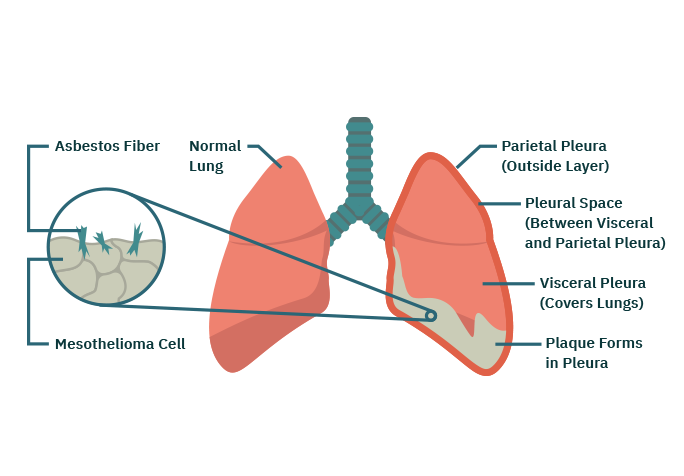
How Is Pleural Mesothelioma Unique?
As the most widely recognized sort of asbestos-related disease, threatening pleural mesothelioma represents around 80 – 90 percent of all mesothelioma cases. Pleural mesothelioma varies from different sorts in four essential ways:
- Location: Pleural mesothelioma is located in the linings of the lungs and the chest wall, known as the pleura.
- Symptoms: As the disease mostly affects the lungs, the primary symptoms affect the respiratory system, such as shortness of breath, or the thoracic cavity, such as chest pain.
- Treatment: The standard treatment for pleural mesothelioma is surgery, which often includes removal of some or all of the pleura and possibly part of the lung, combined with chemotherapy and/or radiation.
- Survival: The prognosis for pleural mesothelioma is poor, with a median survival time of about 1 year. However, there are cases of long-term survival, in some cases as long as 20 years.

- Pleural mesothelioma is the most common form of asbestos-related cancer.
- About 2,500 people are diagnosed with pleural mesothelioma each year.
- Standard treatments include surgery, chemotherapy, and radiation.
- Cause
- Asbestos inhalation
- Location
- Lung/chest lining (pleura)
- Common Symptoms
- Chest pain
- Dyspnea (shortness of breath)
- Pleural effusion (fluid buildup)
- Treatment
- Surgery
- Chemotherapy
- Radiation
- Prognosis
- 6 – 12 months
What is the Prognosis for Pleural Mesothelioma?
Similarly as with a wide range of mesothelioma, visualization for pleural mesothelioma is generally poor. For patients who don't get treatment, the middle survival is just a half year; in any case, certain sorts of treatment can enhance visualization altogether.
For instance, considers have demonstrated that patients who get a mixed drink chemotherapy treatment of pemetrexed (Alimta) and cisplatin have a more extended middle survival time (12.1 months) than chemotherapy utilizing cisplatin alone (9.1 months).
The biggest factors affecting the prognosis of pleural mesothelioma patients are:
- Tumor size and staging
- Cell type (histopathology)
- Patient’s gender and age
- Stage of the cancer
- In general, patients who are women, younger, or have an early-stage diagnosis (Stage 1 or Stage 2) have a better prognosis than those who are men, older, or have a late-stage diagnosis.
What are the Symptoms of Pleural Mesothelioma?
Somewhere in the range of 20 to 50 years can relax a man is presented to asbestos and when pleural mesothelioma indications start to show up. When side effects do start to happen, they regularly appear first in the chest and respiratory framework, albeit a few manifestations (like weight reduction or fever) can be foundational.
Common Symptoms:
- Chest pain
- Shortness of breath (dyspnea)
- Fluid in the lungs (pleural effusion)
- Dry cough
- Weight loss
- Fever
- Fatigue
- Night sweats
- Pleural plaque – a chalky substance that forms on the lungs due to calcification
- Diffuse pleural thickening (DPT) – Gray, fibrous tissue that fills in pleural spaces
- Asbestosis – Scarring of the lungs (fibrosis)
These conditions may also occur on their own in individuals who do not have pleural mesothelioma.
How is Pleural Mesothelioma Diagnosed?
Dangerous pleural mesothelioma side effects frequently give side effects that are like those of different illnesses, making finding to a great degree troublesome by and large. The most well-known approach to analyze the infection is to experience a progression of tests that can discount different ailments, including different kinds of malignancy. The initial step is more often than not to perform at least one imaging checks (x-beam, CT, PET, or MRI) to recognize potential tumors. In the event that such a tumor is distinguished, at least one blood tests might be performed to search for certain biomarkers (abnormal amounts of particular substances in the blood). On the off chance that these tests point toward the likelihood of mesothelioma, the determination should be confirmed through a biopsy – for the most part through a thoracoscopy, thoracotomy, thoracentesis, or mediastinoscopy.
The most common misdiagnoses for pleural mesothelioma include:
- Chronic Obstructive Pulmonary Disease (COPD)
- Pneumonia
- Asthma
- Influenza (the flu)
- Other chest cancers, such as lung cancer or adenocarcinoma
What Treatments are Available for Pleural Mesothelioma?
All types of mesothelioma are treated using a combination of three types of therapy:
All types of mesothelioma are treated using a combination of three types of therapy:
- Surgery – Cytoreduction surgery (also called “debulking”) is often performed with the intent of removing as many cancer cells as possible.
- Chemotherapy – A combination of chemotherapy drugs (usually pemetrexed [Alimta] and Cisplatin) are administered to kill remaining tumor cells.
- Radiation – A blast of targeted radiation to shrink tumors in the body.
Pleurectomy/Decortication (P/D)
This kind of surgery includes expelling the parietal pleura (the external film) and additionally a segment of close-by organs and tissue, for example, the mediastinum, stomach, and pericardium. In spite of the fact that it can help treat numerous side effects of mesothelioma –, for example, pleural emanation – it isn't viewed as a healing operation, and results in repeat around 80 – 90 percent of the time.
Since P/D is generally less upsetting on the body, it is normally offered as a palliative treatment patients who have a later phase of the infection, or when healing alternatives are not feasible.

No comments:
Post a Comment